

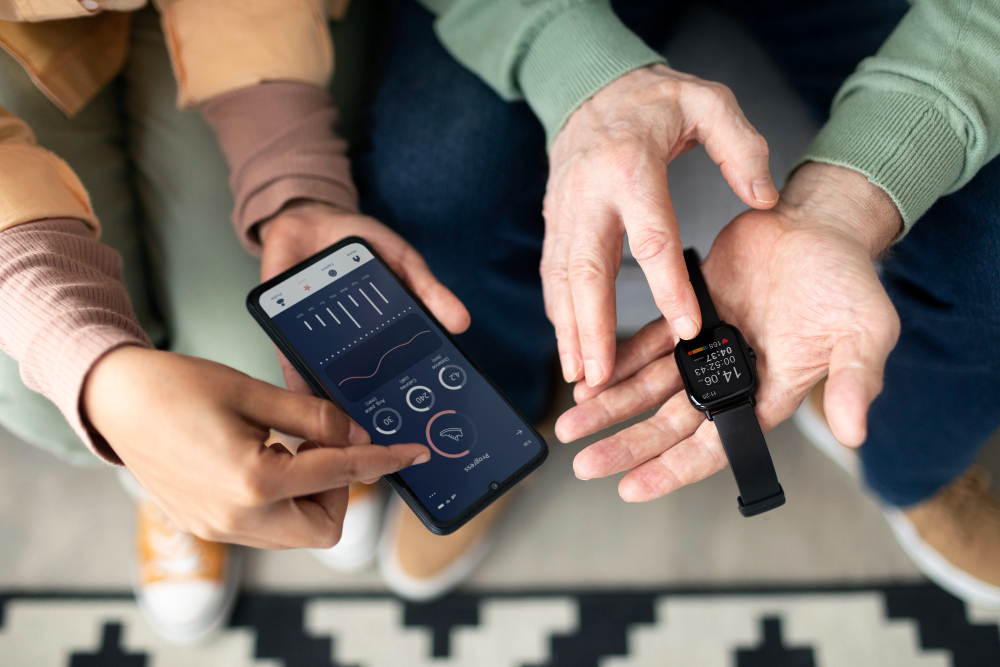
Expansion of Wearable Devices and Remote Monitoring
🧠 AI-Augmented Expansion of Wearable Devices and Remote Monitoring: The Future of Personalized Healthcare
In recent years, the convergence of Artificial Intelligence (AI) and wearable technology has revolutionized the healthcare industry. As we step into an era defined by hyper-personalized and data-driven care, AI-augmented wearable devices and remote monitoring systems are at the forefront of a healthcare transformation. From fitness bands to smart patches and implantables, these intelligent systems are not just tracking — they’re thinking, analyzing, and even predicting.
🚀 Why This Matters Now
As global populations age and chronic diseases rise, there’s an urgent need for proactive, scalable, and cost-effective healthcare solutions. Wearables have already become mainstream, but now, AI is elevating their capabilities, turning simple trackers into intelligent health assistants.
🔍 What is AI-Augmented Wearable Technology?
AI-augmented wearables refer to devices that use machine learning, deep learning, and predictive analytics to process health data in real-time. Unlike traditional wearables that simply collect and display information, AI-powered systems can:
- Detect anomalies and predict health risks.
- Deliver personalized health advice.
- Learn from patterns over time.
- Communicate with healthcare providers autonomously.
📱 Real-World Applications of AI in Wearable and Remote Monitoring
1. Chronic Disease Management
AI-enhanced wearables can detect early warning signs in conditions like diabetes, hypertension, and cardiac arrhythmias. For example, continuous glucose monitors (CGMs) now use AI to alert users to upcoming blood sugar spikes or crashes — sometimes hours in advance.
2. Post-Surgical and Elderly Care
Remote patient monitoring (RPM) tools equipped with AI can observe recovery data and detect complications without requiring hospital readmission. For elderly individuals, AI wearables can detect falls, monitor vitals, and even sense changes in behavior that may indicate cognitive decline.
3. Mental Health Tracking
Innovative wearables now use AI to track emotional states by analyzing sleep, heart rate variability, and speech patterns. Devices like Muse or Flow provide real-time neurofeedback to help manage anxiety and depression.
4. Fitness and Preventive Health
Wearables like the Whoop Strap 5.0 and Oura Ring go beyond counting steps. With AI algorithms, they recommend optimal training schedules, recovery time, and even personalized sleep interventions based on biometric data.
🧬 The Role of AI: Key Technologies Powering the Revolution
- Machine Learning (ML): Learns from user behavior and biological patterns to provide personalized insights.
- Edge AI: Processes data on-device, reducing latency and protecting user privacy.
- Natural Language Processing (NLP): Enables smart assistants within wearables to understand and respond to spoken commands or queries.
- Federated Learning: Allows devices to learn from shared data across users without compromising individual privacy.
🔐 Data Privacy & Ethical Considerations
As more sensitive health data is collected, data security and privacy are top concerns. AI models must comply with regulations like GDPR, HIPAA, and the EU AI Act. To build user trust, companies are increasingly adopting transparent algorithms and on-device AI to reduce risks.
🌍 Market Trends and Growth Outlook
- The global wearable medical device market is projected to reach $195 billion by 2030.
- Over 60% of remote monitoring devices are now integrated with some form of AI.
- Healthcare providers are rapidly investing in AI-powered RPM platforms to cut costs and improve patient outcomes.
🔮 What’s Next? The Future of AI Wearables
- Non-invasive diagnostics: Wearables will soon detect dehydration, nutrient deficiencies, and even early-stage cancer biomarkers.
- Smart clothing & bio-skin patches: These will collect multidimensional data from skin, muscles, and nerves.
- Closed-loop systems: Devices will not only detect but automatically adjust medication or treatment (e.g., smart insulin pumps).
📝 Final Thoughts
The integration of AI with wearable devices and remote monitoring systems marks a pivotal moment in healthcare history. As these tools evolve from passive trackers to active health guardians, the potential for personalized, preventative, and predictive medicine is becoming a reality. For patients, providers, and innovators alike, the message is clear: the future of healthcare is not just digital — it’s intelligent.
💡 Have thoughts or experiences with AI-powered wearables? Share your story in the comments below!